Notes From València: What We Paid Attention To.
What stays with us after a design fair isn't always what we expected to find.
What stays with you.
Before heading to Feria Hábitat València, we wrote about what we hoped to find. Materials. Furniture. Lighting. Craftsmanship. Conversations with people making interesting things.
We had a list. We were more interested in what wasn't on it.
A few weeks later, after spending more time in Spain and returning to the familiar work of active projects, I've been thinking about that distinction. There's a difference between seeing something interesting and understanding why it interests you. Sometimes a little distance makes that difference clearer.
The point of going wasn't to return with a new aesthetic for AHID. It was to look closely, ask questions, and expand the frame of reference we bring to our work.
The things worth looking at twice.
Attending design markets isn't new to me. It's a fairly regular part of being an interior designer. But Spain's longstanding relationship with craft was something I was particularly interested in exploring, especially how regional expertise might be reflected in contemporary products.
And there was plenty to look at twice.
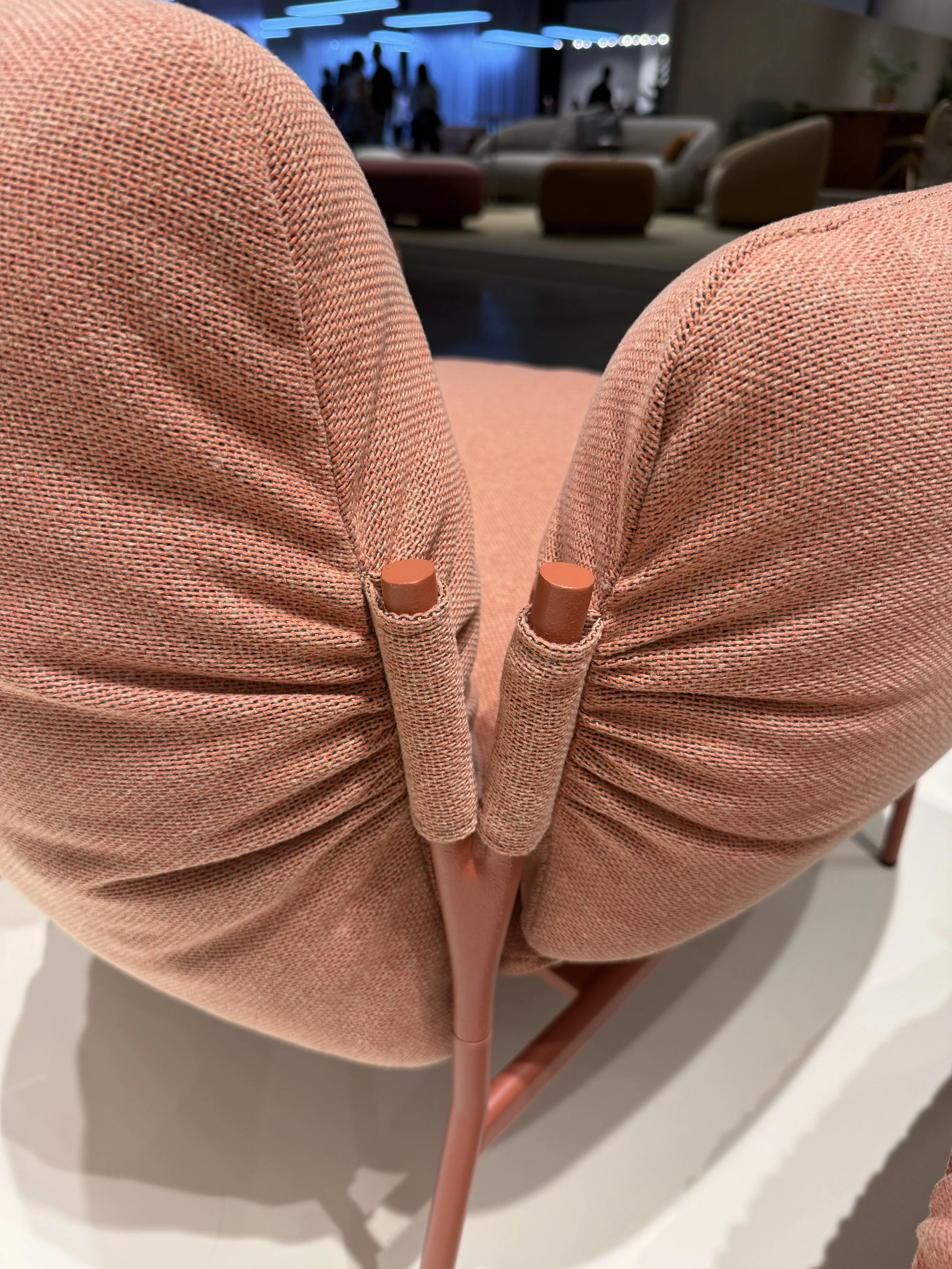
At Ondarreta, a family-owned furniture company designing and producing in País Vasco, there was colorful metal furniture with wonderful upholstery details inspired by an olive branch. Maora, who manufactures ceramics in València, offered delightful tile shapes, glazes and breeze blocks. And at Vergés, another family-owned company based in Tortellà, a gorgeous leather sling lounge chair featured some of the most satisfying metal hardware I've encountered on a piece of furniture — detail that felt more like fashion than furniture.
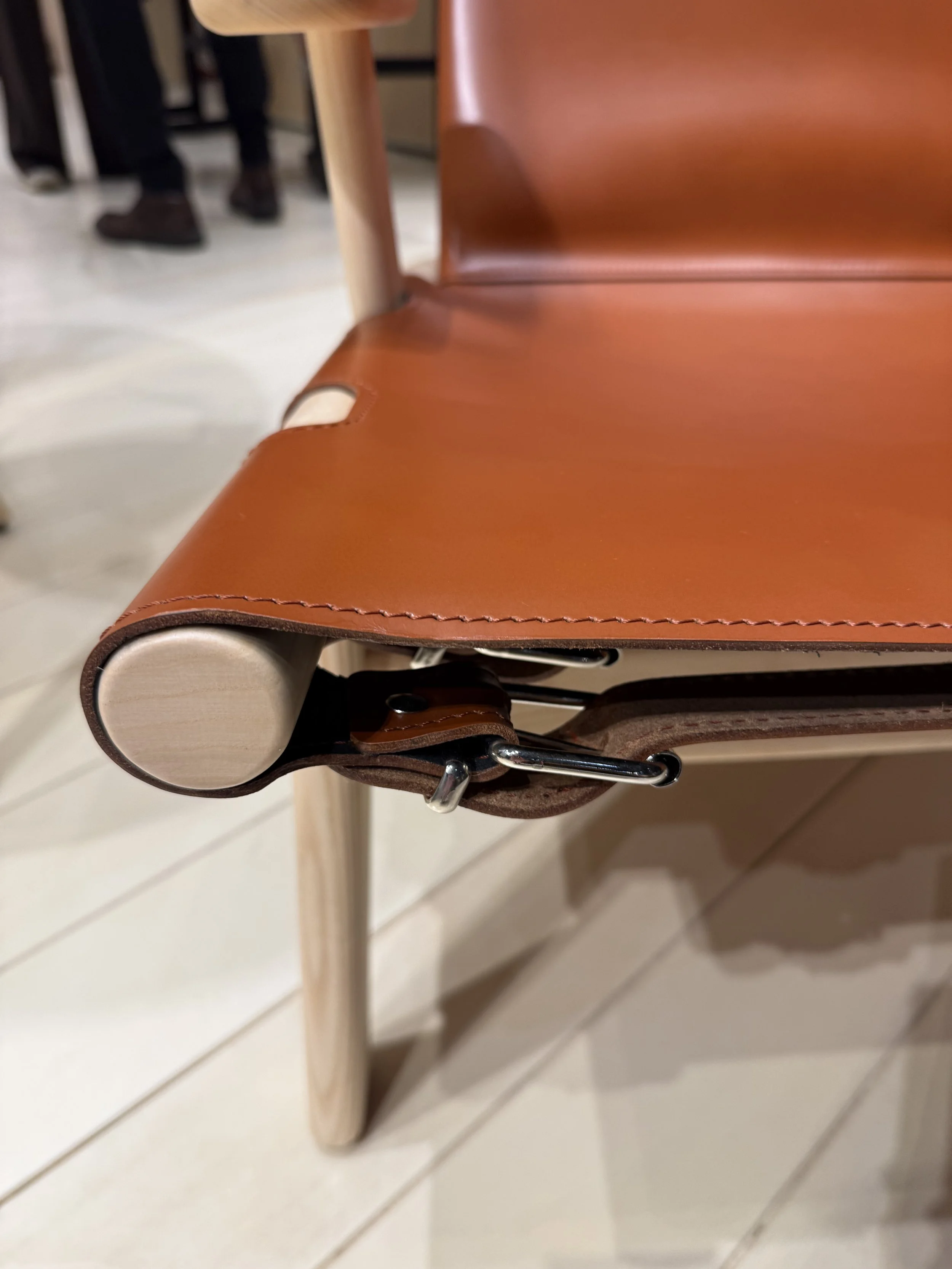
What interested me wasn't simply the finished product. It was the relationship between the material, the construction and the decisions that made each piece what it was.
Why this material? Why this particular detail? What knowledge or technique made it possible?
A beautiful object can get your attention. Understanding how and why it came to exist is often what makes it memorable.
And not everything that interests us needs to find its way into a project. Sometimes the value is discovering another way to approach a familiar problem.
The people behind the work.
One of the things I hoped to explore in València was the relationship between craft and contemporary production.
At the Italian plumbing manufacturer Nobili I found myself in a conversation with a representative, an Italian and a North American speaking Spanish and remarking on each other's accents. Beyond the amusement of that interaction, I learned about the family-owned company's commitment to maintaining its production cycle in Italy, keeping design and manufacturing closely connected with a focus on ergonomics and sustainability.
That relationship between making and knowing matters to me.
At AHID, we spend a great deal of time collaborating with architects, builders, fabricators and tradespeople. We bring ideas to the table, but we also know those ideas become better when they're informed by people who understand their materials and processes intimately.
A finished piece can tell you something about its designer's intentions. The person who made it can often tell you much more.
Inspiration isn't the same as imitation.
There is a temptation, particularly when traveling, to fall in love with something because it feels different from what you see every day.
A material. A color combination. A particular way of furnishing a room.
But something beautiful in València isn't automatically right for a home in Portland. The architecture is different. The climate is different. The people who will use the space are different.
Context matters.
For AHID, inspiration isn't about bringing home a look and finding somewhere to apply it. It's about understanding what makes an idea work in the first place.
What problem was being solved? What makes a particular combination compelling? Which aspects of an approach are particular to place, and which might have relevance somewhere entirely different?
The interesting answer is rarely the automatic one.
What we choose to keep.
One difference I appreciated about Feria was the breadth of disciplines represented together. Furniture, textiles, materials, kitchen and bath fixtures, and hospitality design shared the same larger conversation.
For a studio like AHID, whose work spans whole-home renovations, kitchens and bathrooms, furnishings and custom pieces, that breadth felt particularly relevant. These aren't separate design problems. They're interconnected parts of how a space works for the people who use it.
But some of the observations that stayed with me most happened after leaving the fair.
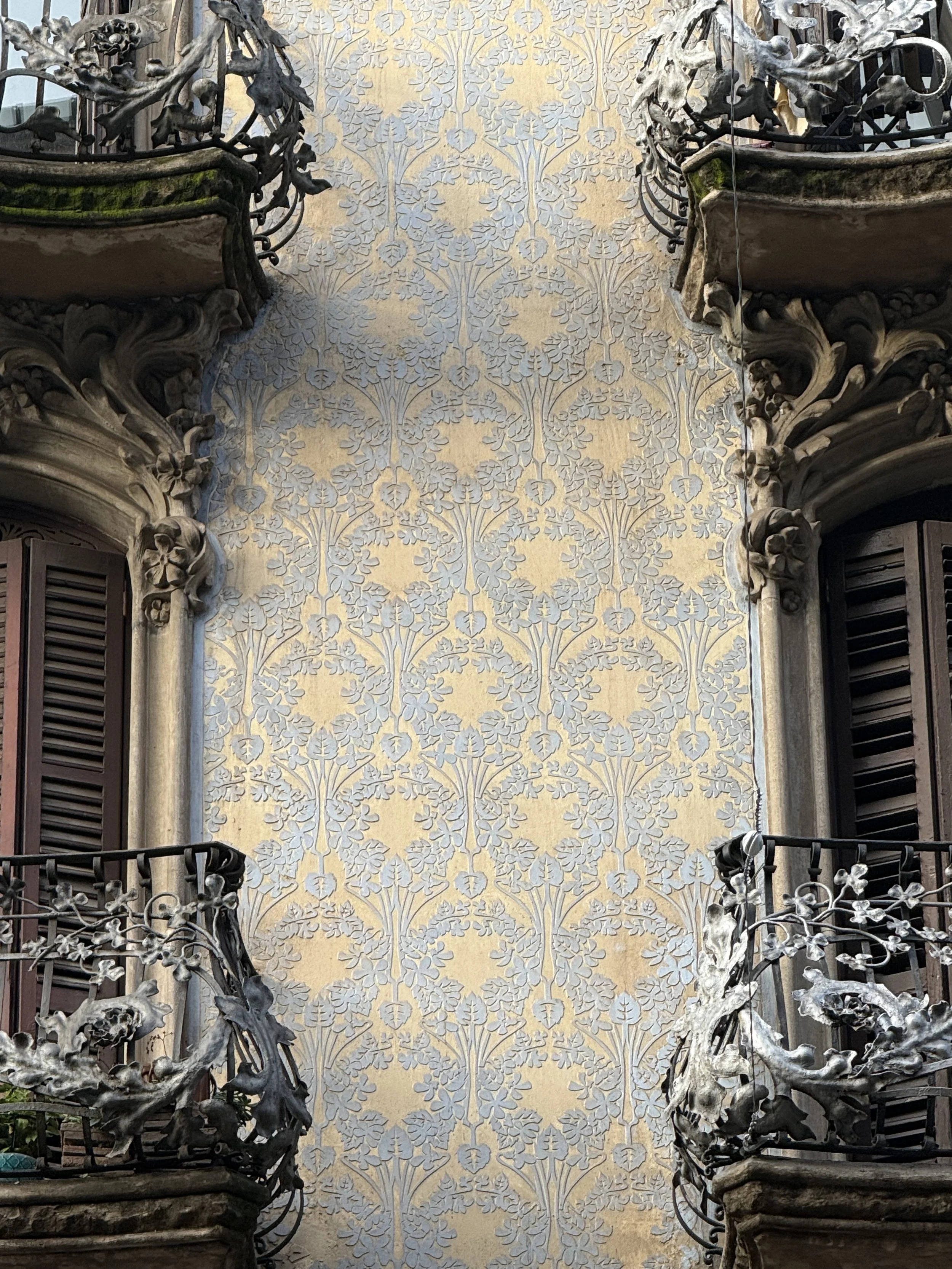
Barcelona is a city I've adored for decades, and a walk through its streets looking up at the buildings never disappoints. There is something refreshing about a place where beauty itself continues to be valued. Where ornament isn't automatically dismissed as unnecessary, and where a beautiful detail can remain part of daily life rather than becoming something preserved only for a museum.
I trace my intense love of tile, at least in part, to studying in Spain and Mexico during college. And I still find myself captivated by the way tile carries history, craft and personality into a space — AHID clients know this all too well. I am always struck by the historic tile floors retained within otherwise modernized interiors in Spain. Rather than removing them to create something uniformly new, the existing floors are rehabilitated to become part of what makes the new space interesting.
It's a reminder that renovation doesn't always require replacing what came before. Sometimes the most compelling design decision is recognizing what deserves to stay.
Beauty has a job to do.
A visit to the Hospital de la Santa Creu i Sant Pau in Barcelona brought that idea into particularly sharp focus.
Designed by architect Lluís Domènech i Montaner and constructed in the early twentieth century, the fully functioning hospital until 2009 was conceived with an extraordinary degree of attention to the experience of the people receiving care.
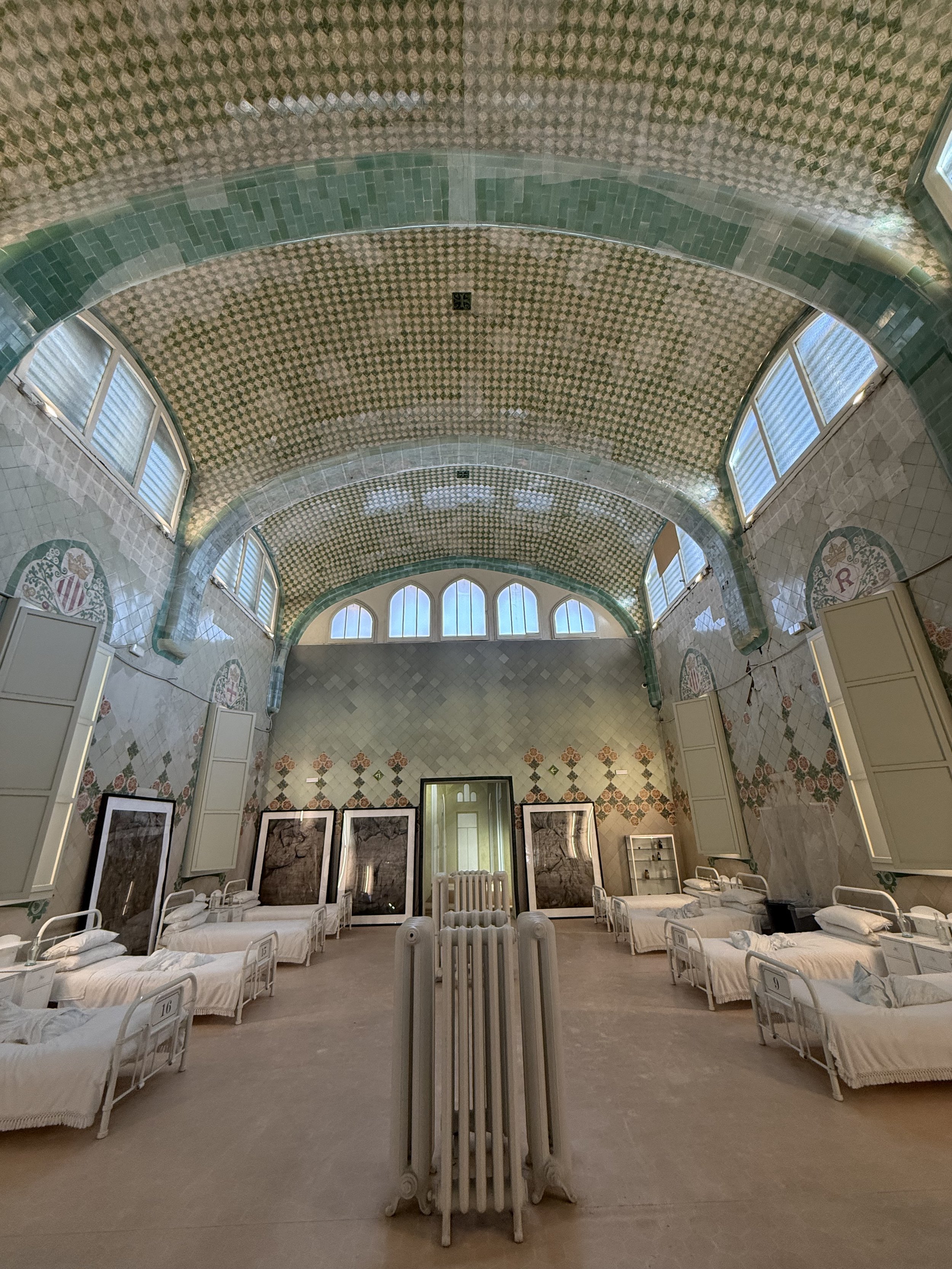
Natural light, good ventilation, gardens designed for views and fragrance, color and beautiful interiors were not treated as incidental luxuries. They were part of an architectural vision in which the environment itself could contribute to patients’ well-being as they convalesced.
The curves and the extraordinary ceramic tilework were all considered with a practical dimension: the design of surfaces suited to the cleanliness required in a hospital. The artful windows were intended to allow good ventilation as well as flood the spaces with natural light. And the gardens were purposefully planted with citrus plants so that the patients could enjoy their fragrant blossoms.
What struck me most was the underlying conviction that people receiving care, regardless of their economic circumstances, deserved to be surrounded by beauty.
It's difficult to imagine a clearer expression of something we believe at AHID: design should work beautifully for the people who use a space. Beauty and function aren't opposing goals. The most interesting work often happens when they're considered together from the beginning.
Making room for what already exists.
At a centuries-old masía in Costa Brava, I encountered another expression of the relationship between past and present.
Old stone walls and stairs, wood plank floors and marble bathrooms displayed the beauty of a patina on quality materials. They were paired with inviting furnishings, colorful vintage flat-weave floral rugs and the modern conveniences that make it possible to enjoy a café con leche whenever the mood strikes. Nothing about the place suggested that comfort required erasing its history.
And one detail was entirely unexpected.
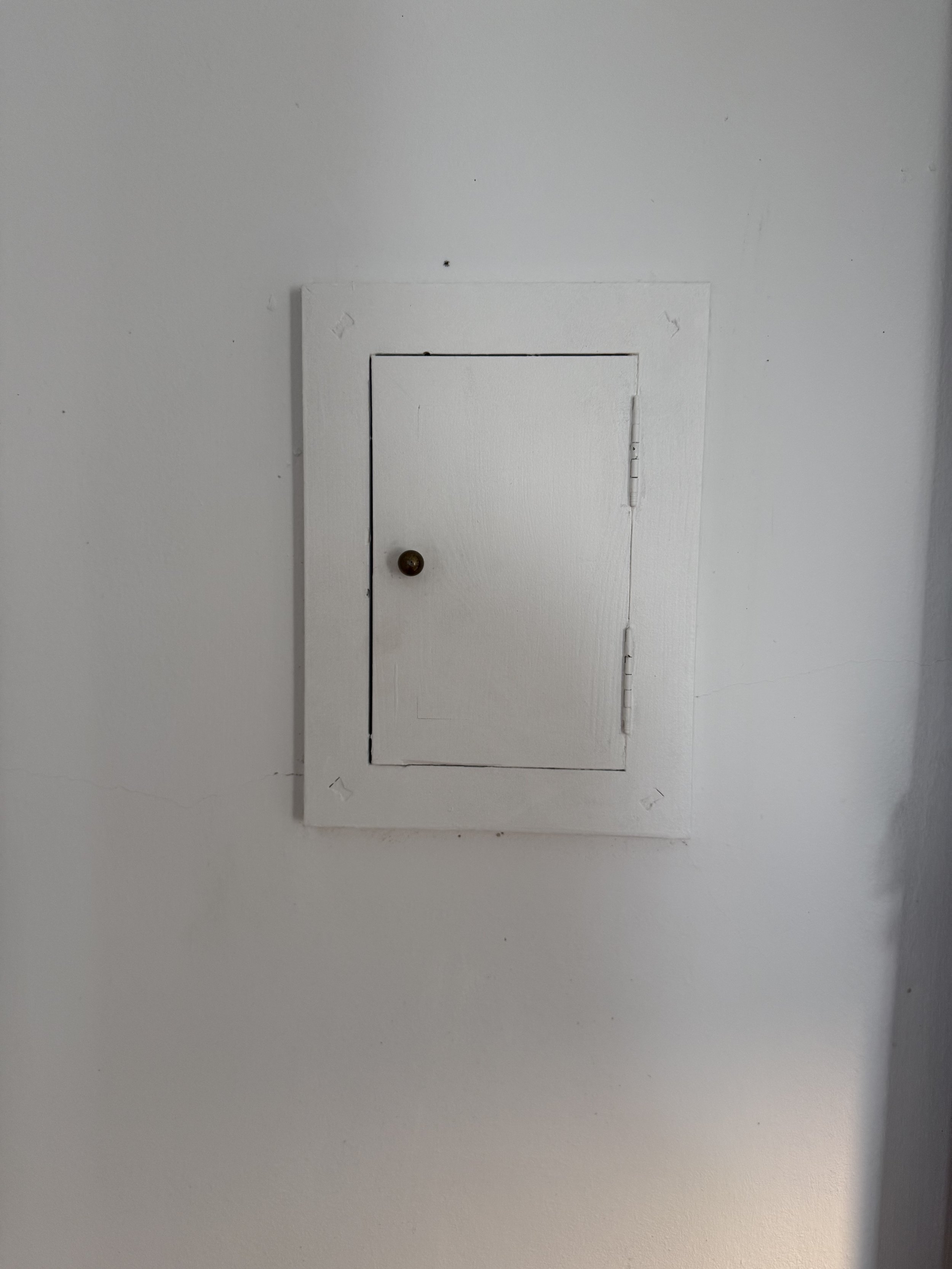
Rather than treating birds nesting within the old stone walls as something to eliminate, the property had embraced their presence. Small viewing openings, complete with glass and delightfully irregular little doors, allowed guests to observe the nests from inside. It was practical, peculiar and charming.
And it was a reminder that responding thoughtfully to existing conditions can produce something far more interesting than trying to make those conditions disappear.
Designers thrive on constraints. Sometimes the constraint turns out to be the best part.
The conversations you couldn't have planned.
Then there were the people.
On the ride back to my hotel from Feria my taxista, a lifelong Valencian, told me how the city had changed during her lifetime, what she hoped for her child's future, and before I departed her vehicle she wrote down a list of which three restaurants locals actually frequented and the quintessential Valencian dishes I should try.
Or a conversation with a Barcelona representative for a furniture company that lasted half an hour and traveled well beyond the furniture itself, from the history of the family-owned business and the craftsmanship behind its pieces to the cultural and historical relationship between Catalunya and Spain and her daughter’s exchange student experience in North America.
These weren't conversations I could have scheduled in advance or added to my list of things to see. And yet they're part of what I value most about spending time somewhere unfamiliar. Objects tell us something about a place. People help us understand the context in which those objects exist.
That context changes what we notice and what we appreciate.
What we're bringing back.
There were certainly manufacturers I'd like to continue conversations with, materials worth investigating further, and details I expect to revisit when the right project presents itself.
But I'm not particularly interested in declaring what I've learned about Spanish design after one fair and a couple weeks of travel. That would be a rather quick conclusion to draw from an experience whose value lies, in part, in recognizing how much more there is to understand.
What has stayed with me is the relationship between things we too often consider separately. Craft and contemporary production. Beauty and utility. History and everyday comfort. The expertise of the maker and the intentions of the designer.
And perhaps most of all, a reminder that the willingness to work with what's already there rather than assuming something new must be better can often bring just the right amount of delight and interest to a space.
Some of these observations may eventually influence a material selection or a custom piece. Others may lead to a new relationship, a different approach to an existing condition or simply a better question. Some may never appear in a finished project at all. That's fine.
We went to València with a list of things to look for. What matters now is what we're still thinking about. Because the best reason to look beyond the familiar isn't necessarily to find something new.
It's to return seeing what's already there a little differently.